First published: December 2025
Ateliers and studios across Japan are using the power of art and togetherness to help people with learning disabilities establish roots and flourish.
Japanese society tends to place a high value on harmony, and maintains a culture of pre-established order, favouring collective conformity over the individualism typical of Western contexts. This tendency surfaces in the arts, where questions arise around the meaning of originality, and the dilemma of aesthetic judgements that treat artworks as detached objects. Within this context, creative ateliers for people with disabilities, in welfare, education and healthcare settings, pre-date the adoption of terms like art brut or outsider art in Japan.

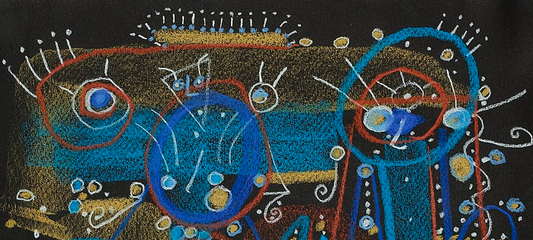
Koji Nishioka, Untitled, 2008, ink on paper, 15 x 21 in. / 37.5 x 53.5 cm
These ateliers take an approach that could be described as “creation of place and relationships”, emphasising the dynamics between the individual and the collective. Rather than prioritising technical skill or artistic talent, they focus on supporting the artist’s daily life and autonomy. Such practices represent a uniquely Japanese approach to rethinking the role of art in society, and tend to occur in two settings: care studios for individuals with intellectual disabilities, and ateliers within psychiatric day-care units.

Koji Nishioka at work on his current, ongoing artwork, 2018
Atelier Corners – based in Abeno, an area in the city of Osaka – falls into the former category, however it did not start out as an art studio but as a community-rooted initiative to enable people with disabilities to live in the neighbourhoods where they were born. Its origins trace back to a 1981 parents’ group – Abeno de Tomo ni Ikiyou Kai (Let’s Live Together in Abeno) – which led to the launch of a self-managed workshop in 1989. Initially, it carried out subcontract work making screws, but the rigid, repetitive process left little room for creativity. In 2005, the organisation transitioned to an art-focused atelier, adopting the new name Atelier Corners, relocating to a traditional house and embracing a philosophy of “freedom and simple affirmation”.

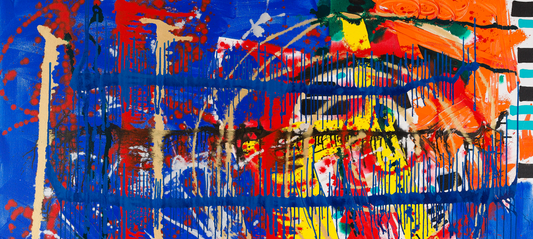
Naoto Iguchi, Untitled, n.d., ink on paper, 10 x 14.5 in. / 25.5 x 36.5 cm; Heralbony
By RENA KANO
This is an article extract; read the full article in Raw Vision #125.